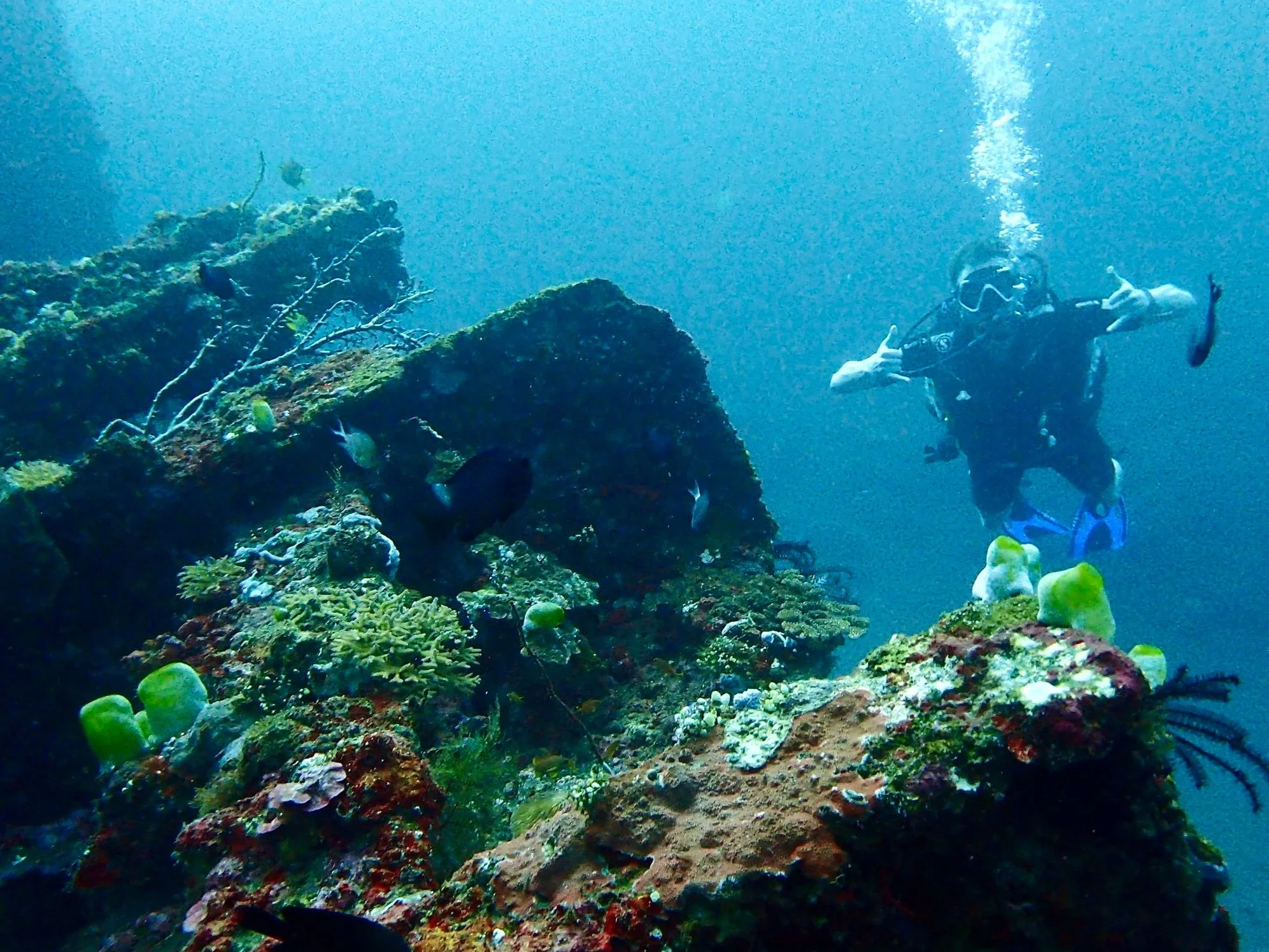
USS Liberty Wreck, BaliA Ship, Some Fish and a
Red Snapper Guard
It’s a wreck that feels open rather than intimidating. You’re never far from open water or light, which is exactly why it works so well for first wreck dives - and why people keep coming back.
As for the fun stuff, the USS Liberty is absolutely crawling with wildlife. At this point it’s less “sunken ship” and more high-rise apartment block for any nearby underwater residents.
You’ll almost certainly see clouds of reef fish hanging around the structure - fusiliers, sweetlips, parrotfish, surgeonfish - all doing that slightly chaotic, constantly-in-the-way thing they’re very good at. Moray eels peer out from the wreckage, bumphead parrotfish cruise past like tanks, and there’s usually a turtle or two casually ignoring the fact you’re there. If you’re shore diving (which you probably are), you’ll also pass blue-spotted stingrays hanging out like guards posted at the entrance.
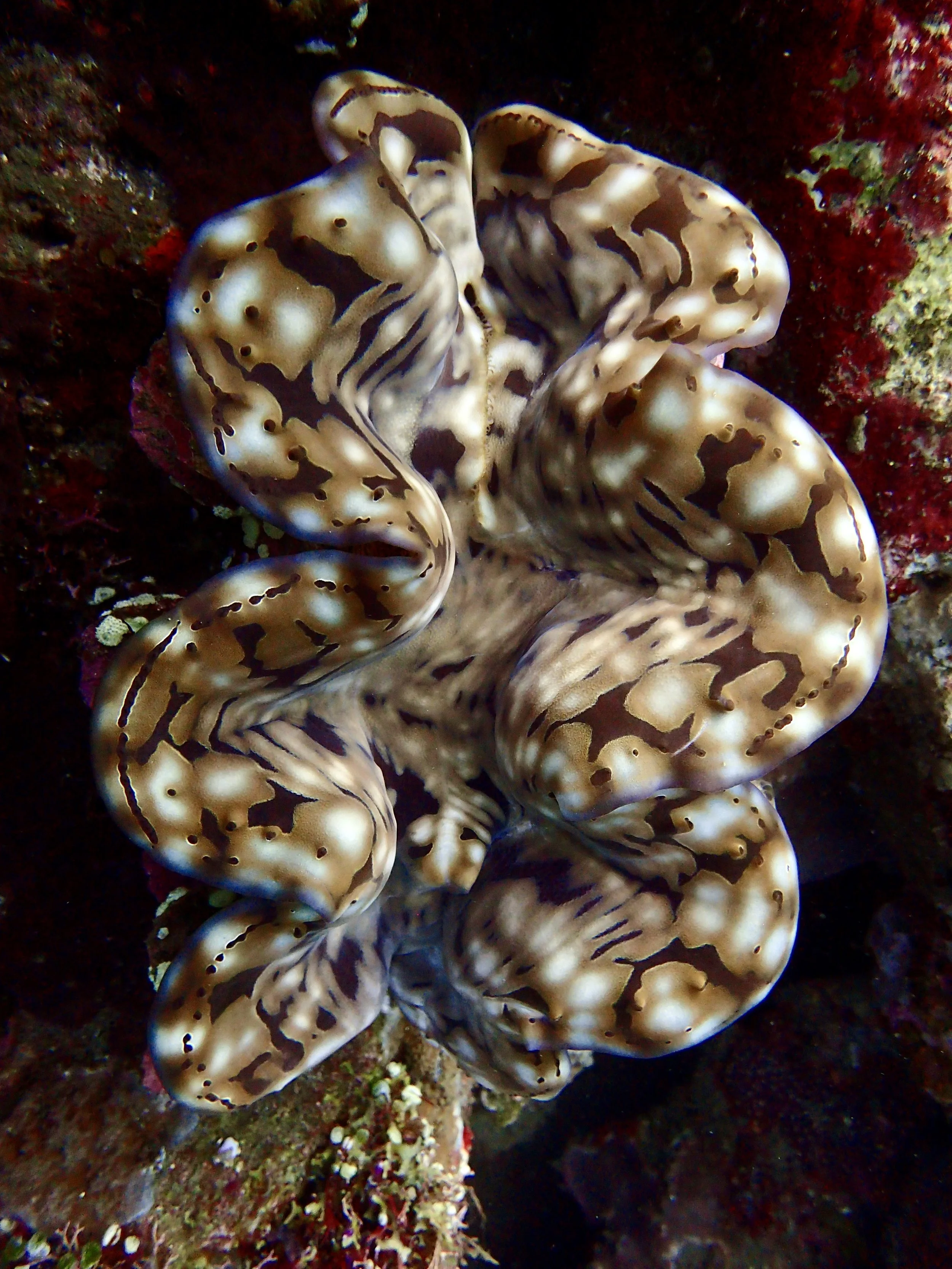
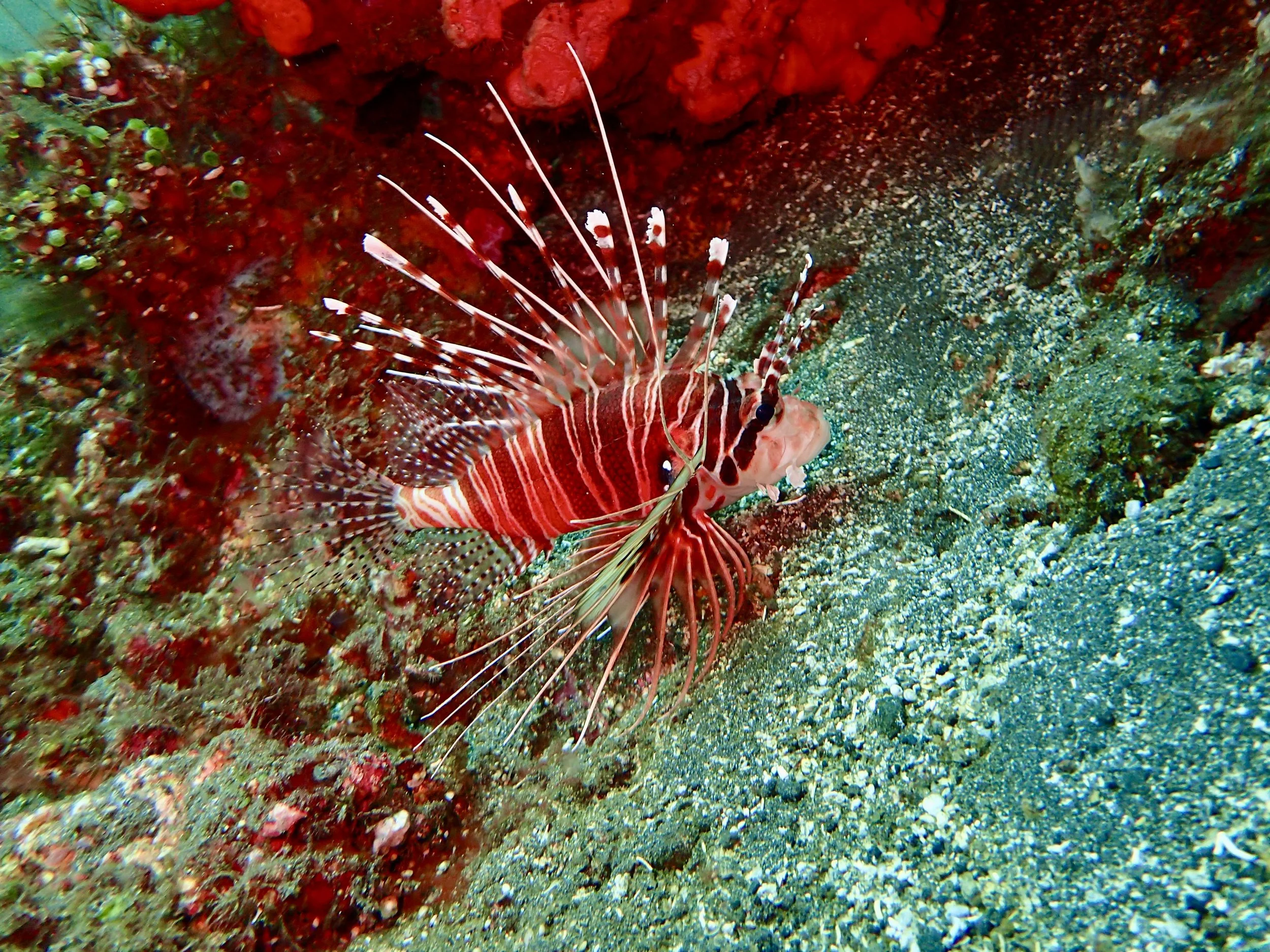
Wreck dives usually come with a bit of commitment. Boats, depth, currents, dark swim-throughs - and the quiet pressure of not wanting to look like the least competent diver in the group. The USS Liberty largely ignores all of that, and given you’re almost certainly not the only group of divers there, the pressure drops almost immediately.
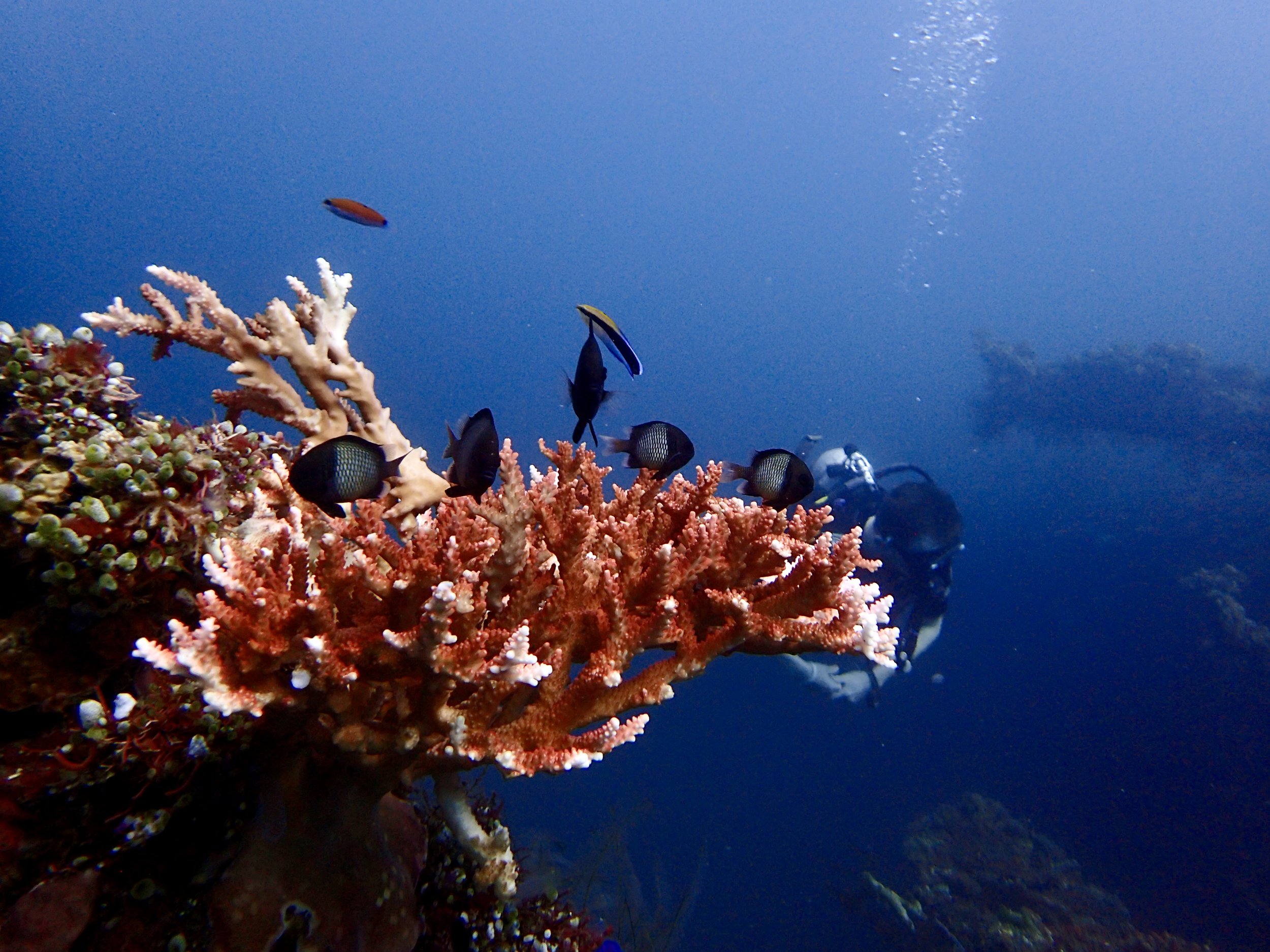
While you can’t (and probably shouldn’t) walk straight into the wreck, it sits just off the coast of Bali with refreshingly easy access. Beached in Tulamben, this is a wreck you can more or less snorkel into. No boat, no drama, no long descent - just a short swim, a gentle drop, and suddenly you’re finning around a 120 meter long, World War II cargo ship that never planned to be a dive site, but absolutely nailed the role.
Yes, it’s crowded. Very. If you’re looking for solitude and silence, you’ll probably find more peace in the car park. But if you’re after something a bit different - a proper wreck that’s accessible, forgiving, and absolutely packed with life - the USS Liberty earns its reputation.
The wreck lies on its side, sliding gently away from the shoreline, which makes navigation refreshingly straightforward. The shallowest sections start at around 5 metres, with the structure stretching out to roughly 32 metres if you choose to follow it deeper. You don’t have to commit to the whole thing - you can dip in, explore a section or two, and drift back shallower without ever feeling boxed in, which also makes it easier to avoid the worst of the crowds if it’s rush hour.
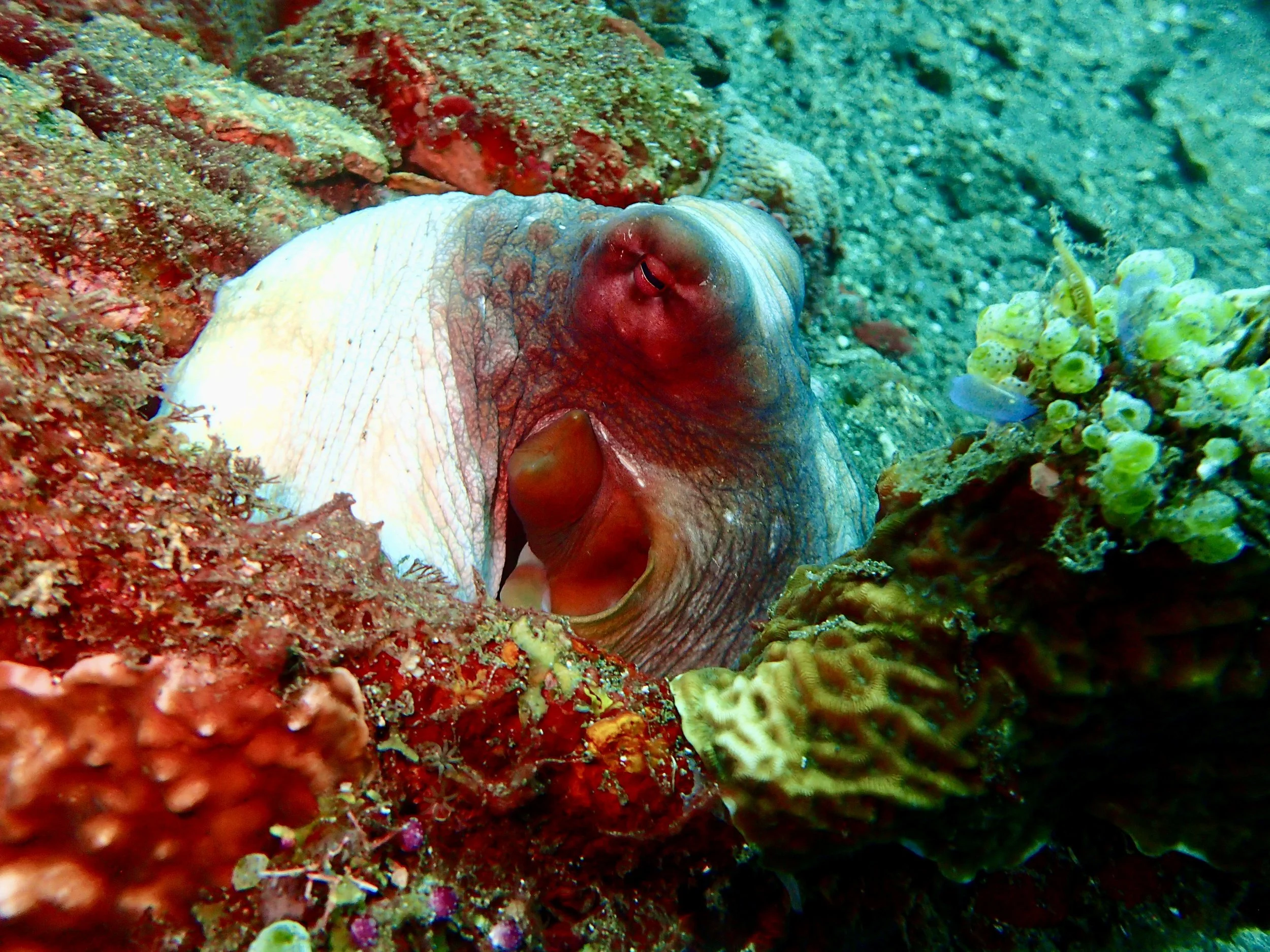
Most divers spend their time weaving along the upper structure rather than diving deep into the wreck itself. There’s plenty to see without going inside anything tight or dark, and the layout naturally encourages slow, unhurried exploration. Cargo holds, gun mounts and twisted steel are clearly defined, now softened by coral and marine life that have fully claimed the ship as their own.
You can head into the cabin if you fancy it - it sits at around 12 metres and, when I visited, came with a slightly ominous red snapper stationed at the entrance like security. If enclosed spaces aren’t your thing, there’s no pressure. A large gaping hole along the side means you’re never far from daylight or a very easy exit.
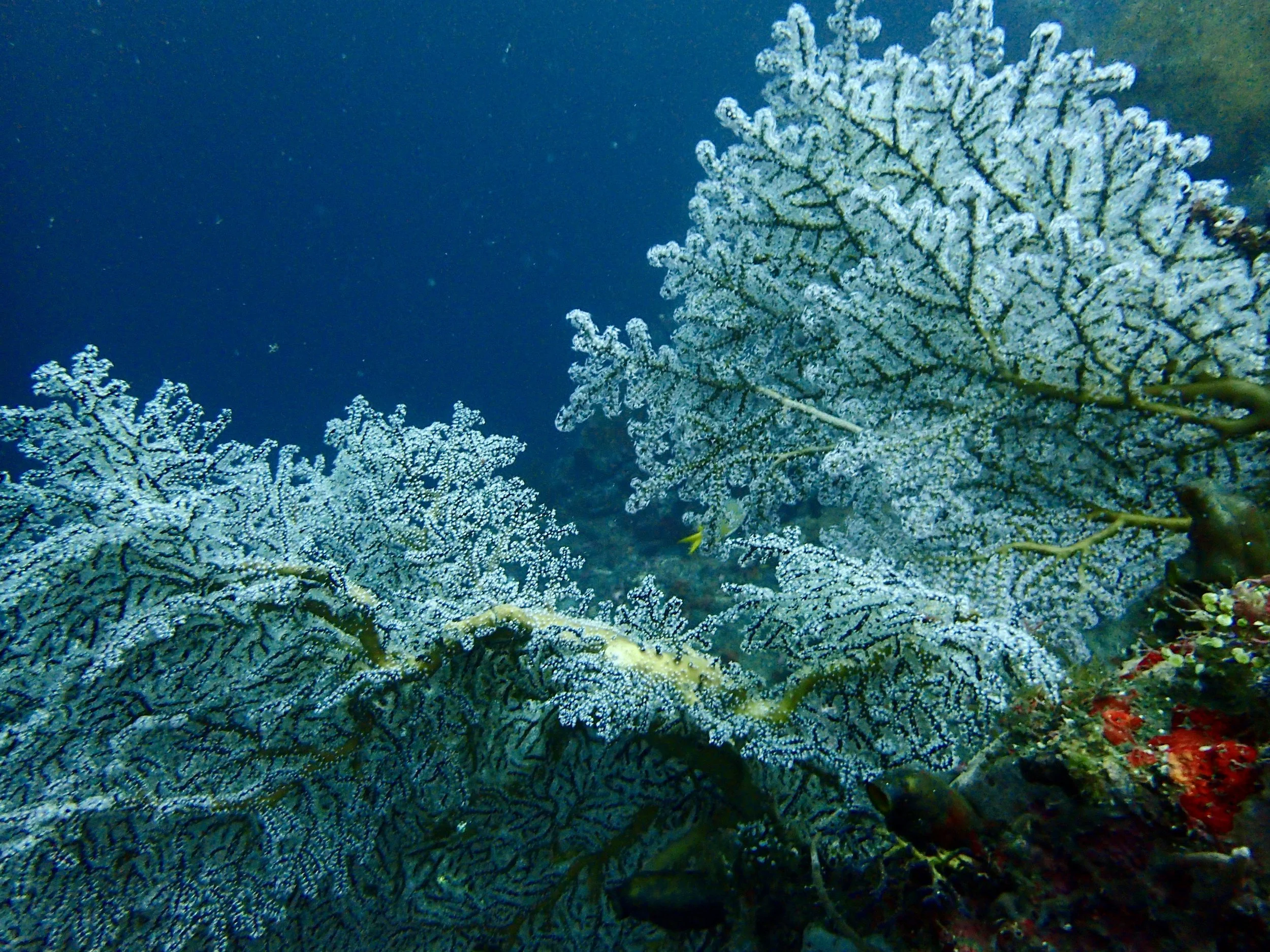
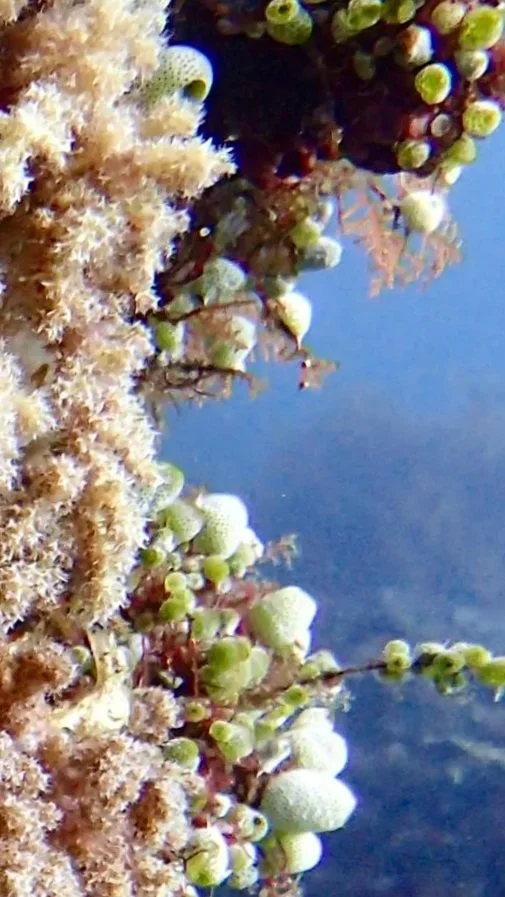
At the end of the dive, whether you’ve spent your time hovering over turtles, dodging curious reef fish, or just soaking up the sheer scale of a World War II cargo ship that somehow became a coral condo, you can’t help but grin. The USS Liberty isn’t about pushing limits or chasing thrills - it’s about showing up, floating along, and letting the wreck do its thing. Crowds, shallow water, and all, it’s one of those dives that sticks in your memory because it’s just… ridiculously, perfectly diveable. Go on, give it a try - the ship doesn’t bite, and the red snapper at the cabin door is more bark than bite anyway.
Macro lovers aren’t left out either. The Liberty is famous for nudibranchs, pygmy seahorses, ghost pipefish and the occasional frogfish - if you slow down and actually look.
Conditions are usually about as friendly as wreck diving gets. Currents are generally mild, visibility is decent on most days, and because so much of the wreck sits shallow, you’re never battling depth or bottom time. It’s a dive that feels controlled rather than demanding - which is exactly why so many people choose it as their first proper wreck.
If this is your first wreck, the USS Liberty is a very gentle introduction. You’re never far from open water, there’s plenty to see without going inside anything tight or dark, and exits are always obvious. You can take it at your own pace, stay shallow, and still come away feeling like you’ve genuinely done a wreck dive - not just ticked a box.